Discretionary vs Systematic Trading: What Each Demands and Why Many Traders End Up in Between
Systematic trading asks for rules precise enough to code and the patience to test them; discretionary trading asks for screen time and a way to tell skill from luck. What each one demands, how each one fails, and why many traders end up with rules for the setup and judgment for the filter.
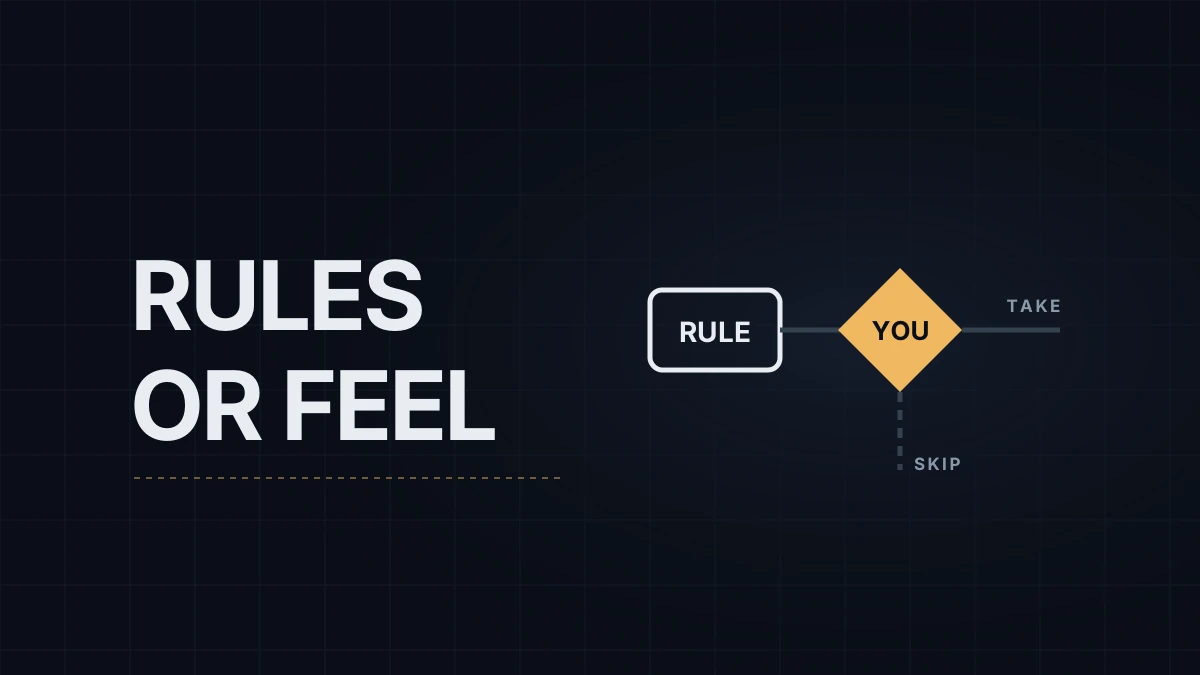
Two traders buy NQ at the same level on the same morning. The first bought because a rule fired: price came back to the prior day's high after the open, held it for two bars, and the rule says buy with a stop below the level. The second bought because the pullback looked tired, the sellers at the level seemed to dry up, and the trade felt right. Both entries are on the same tick, and the difference between them only shows up over the next hundred trades.
That's the difference between systematic and discretionary trading. A systematic trader follows rules complete enough that someone else, or a computer, could take the same trades from the same data. A discretionary trader decides each trade, using everything they see, including things they couldn't write down. Both read the same chart, the subject of how to read a price chart; they differ in who makes the final call.
What systematic trading demands
The first demand is precision. "Price holds the level" has to become a number of bars, a number of ticks and a time of day, and every vague word in a trading plan turns out to hide several decisions. Writing a strategy down completely is harder than most traders expect, and it's the step where many ideas quietly fall apart.
The second is data and testing. A rule can be run over years of history in a tool like the NinjaTrader Strategy Analyzer, but a backtest only means something with enough trades in it, and the margin of error on a win rate is wider than intuition suggests; how many trades before you judge a setup puts numbers on it. The more parameters a rule has, the easier it is to fit the past by accident, and the gap between that fitted past and live trading is the subject of backtest vs live results.
The third is the hardest: following the rules through a drawdown. A system that has lost eight trades in a row asks its trader to take the ninth exactly as specified, and that's the moment many traders start editing the system by hand, which turns it back into discretion without the journal to measure it.
What discretionary trading demands
Screen time comes first. Judgment about whether a level is holding is built from thousands of observations, and it can't be skipped or copied from someone else's chart.
The real problem is measurement. A discretionary trader's edge lives in decisions that aren't written down, so it can't be backtested, and a good month can't easily be separated from a lucky one. The only way to see it is a journal that records each decision with the reason behind it, then grades the decisions apart from the outcomes; trade setup grading is one way to do that. And judgment varies with the person's state: the same setup looks different after three losses, which is where discretion and tilt start to overlap.
Why many traders end up in between
The common hybrid has two layers. The rules define what a setup is, where the stop goes and how much to risk. Judgment acts only as a filter: take the trade or skip it. That keeps the parts that need to be consistent, risk and sizing, out of reach of a bad mood, and leaves the parts that are hard to code, such as reading the context of a level, to the trader.
The hybrid is also easy to measure, which pure discretion isn't. Log every signal the rules produced, taken or skipped, and compare the two groups after a few hundred. If the skipped trades did as well as the taken ones, the filter added nothing; if they did worse, the judgment is worth something and can be described; and if they did better, the filter is costing trades.
Coming to trading from software, I lean systematic by habit, so I'm writing one setup as code while still trading the rest by hand.
Educational content, not investment advice. Futures trading involves substantial risk of loss. Examples are for illustration only. Read the full Risk Disclosure.