Education / General

General

Risk, psychology and process — the fundamentals that apply no matter what you trade. Start here if you're new.

01 Education Sep 3, 2026

How to Read a Price Chart: Candlesticks, Bars and Line Charts from Zero

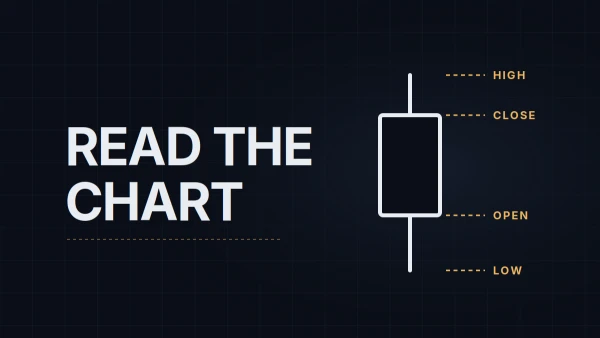
The from-zero guide to reading a price chart: how a candlestick, an OHLC bar and a line chart draw the same four numbers, what a long wick or a small body means, why one candle can't tell you what happened inside it, and five named patterns described as what they are.
02 Education Sep 5, 2026

Timeframes and Bar Types Explained: Time, Tick, Range and Volume Bars

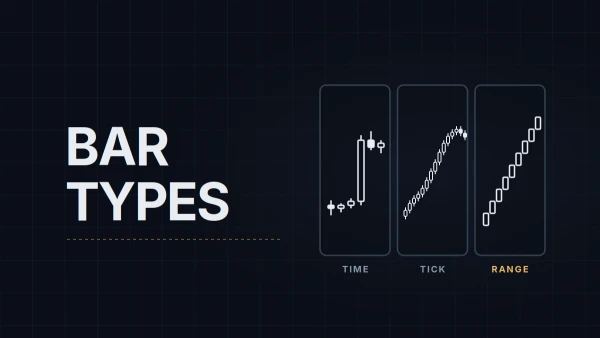
Every chart replaces the x-axis with something: the clock, the number of trades, the contracts traded or the distance price moved. That choice decides what you see and what disappears. The four bar types from zero, the same hour on all of them, and how to choose.

03 Education Sep 6, 2026

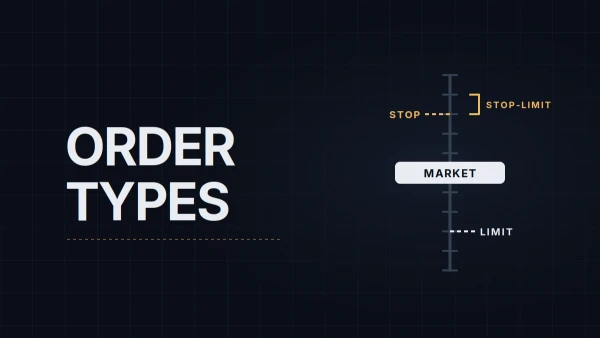
Order Types Explained: Market, Limit, Stop, Stop-Limit and OCO Brackets

An order is a promise about either price or execution, never both. The four types from zero, when each one fails you (slippage, no fill, a stop that never triggers), what CME does with a market order behind the scenes, and how a bracket ties two of them together.

06 Education Sep 9, 2026

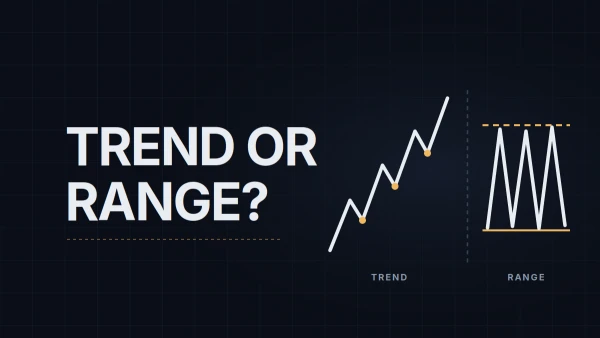
Market Structure: Trend vs Range, Higher Highs, Lower Lows and Rotations

Every intraday method assumes a regime: reversals need a range, breakouts need a trend, and the same entry is right on one kind of day and wrong on the other. What higher highs, lower lows and rotations actually mean, how to read the day's structure early, and what to do when it changes.

07 Education Sep 2, 2026

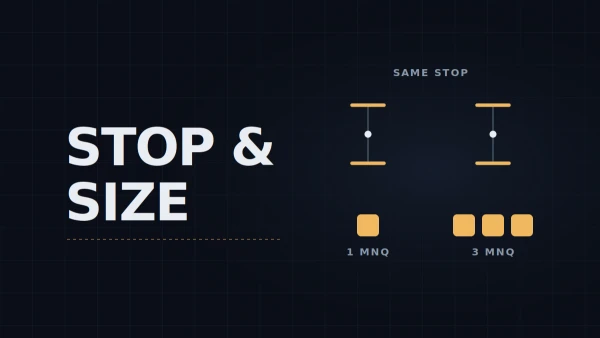
Stop Belongs to the Setup, Size Belongs to Capital

The most common sizing question bundles two decisions that have nothing to do with each other. Where the stop goes is a fact about the trade; how many contracts is a fact about the account. One division connects them — and running it backwards is how evaluations end.

11 Education Sep 15, 2026

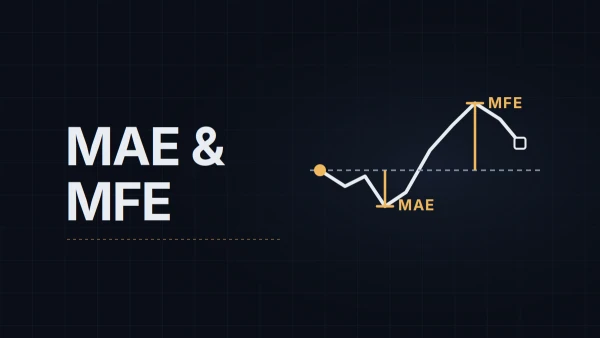
MAE and MFE Explained: What Excursion Data Says About Your Stops and Targets

Every closed trade leaves three numbers behind; the account keeps one. Maximum adverse and favorable excursion, read on a 40-trade sample: which side of each histogram says something about the stop and the target, the cost of moving either, how to collect the numbers, and four ways they mislead.

14 Education Sep 22, 2026

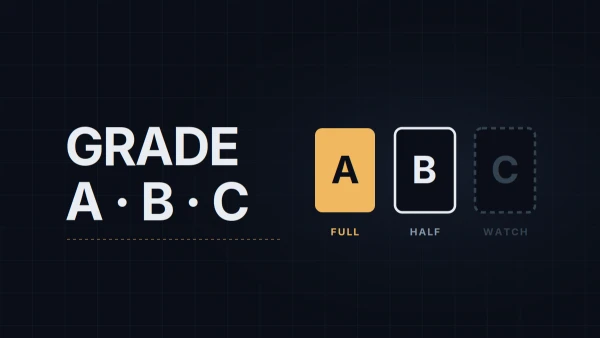
Grading Setups A, B and C: A Framework for Taking Fewer, Better Trades

A journal that logs every reversal as "reversal" averages a 65% trade with a 40% one and calls the result a strategy. Five criteria that separate an A from a C at the same level, three ways to turn them into a grade, what to do with the grade at entry, and how many trades it takes to trust it.

16 Education Sep 27, 2026

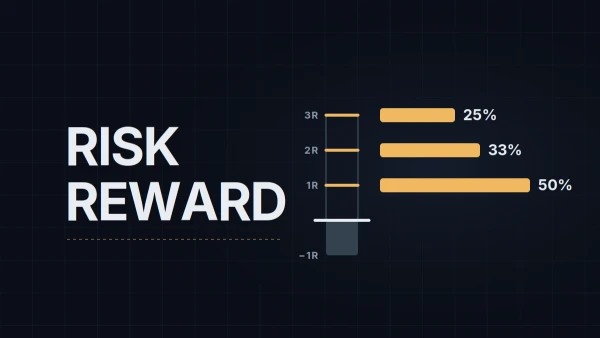
Risk-Reward Ratio Explained: Why 1:2 Isn't a Rule

The ratio chosen at entry doesn't create an edge: move the target and the win rate moves with it. Two hypothetical setups show why one pays best at 1R and the other at 3R, what costs do to tight stops, and the one job a minimum ratio does well.

18 Education Sep 28, 2026

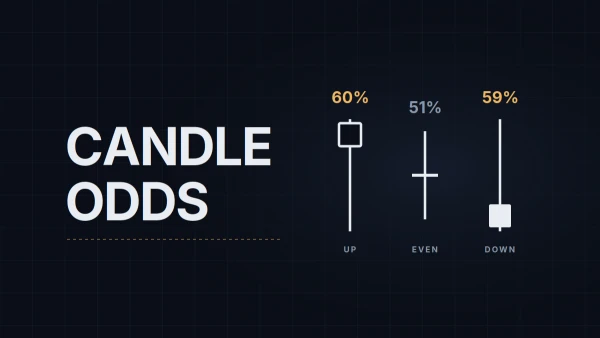
Candlestick Patterns That Matter and Those That Don't, With Base Rates

Most famous candlestick patterns land near a coin flip when counted, and the few with big numbers owe part of them to where the pattern closed. Bulkowski's figures read by shape instead of name, the base rate every hit rate needs, and what tests on intraday futures found.

19 Education Oct 5, 2026

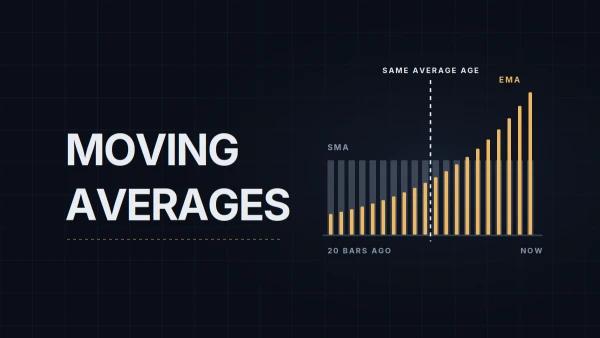
Moving Averages: What They Measure and Why Most Settings Are Arbitrary

A moving average summarizes recent closes, and the settings traders argue about change less than they think: an EMA(20) is no younger on average than an SMA(20). The arithmetic of SMA, EMA and WMA, where 20, 50 and 200 came from, and the one condition that turns an average into a level.

20 Education Oct 7, 2026

How Many Trades Before You Judge a Setup? Sample Size for Traders

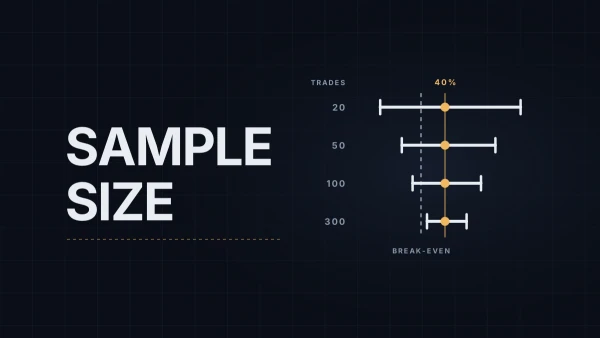
What 20, 50, 100 and 300 trades can and can't tell you about a setup, with the ranges computed: how often a real edge shows a losing record, how often no edge looks good, a rule of thumb for the count you need, why trailing exits need more, and what to do while the sample is small.

21 Education Oct 15, 2026

Resulting: Judging a Trade by Its Process, Not Its Outcome

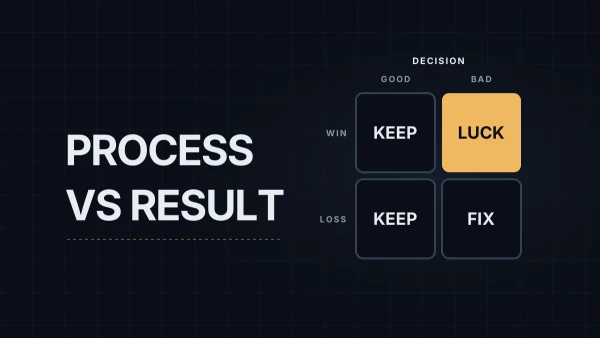
A rule-breaking trade that wins feels good; a by-the-book trade that loses feels like a mistake. Resulting, a poker term Annie Duke made popular, is judging decisions by their outcomes. What it costs, the four mixes of decision and outcome, and a journal routine that grades the decision first.

← All education topics

Trade Notes

One email per week. What I traded, what I learned, and what's on the desk for next week. No spam, no signals.