A trader who slept four hours doesn't feel reckless. He feels a little slow, maybe short-tempered, and otherwise fine. Most of what trading education covers is the chart, which is where the guide to reading a price chart starts, and very little covers the state of the person reading it. The research on sleep and risk suggests the changes that matter most are the ones that don't feel like anything.
In a 2007 study by researchers at Duke and Duke-NUS in Singapore, published in the journal Sleep, volunteers played a gambling task in an MRI scanner after a normal night and again after 24 hours awake. Sleep-deprived, they showed stronger activity in the nucleus accumbens, a region tied to anticipating reward, when they chose the riskier option, and weaker activity in the insula, a region tied to the emotional weight of an outcome, when they lost. They didn't pick risky options more often in that experiment. They expected more from them and felt the losses less.
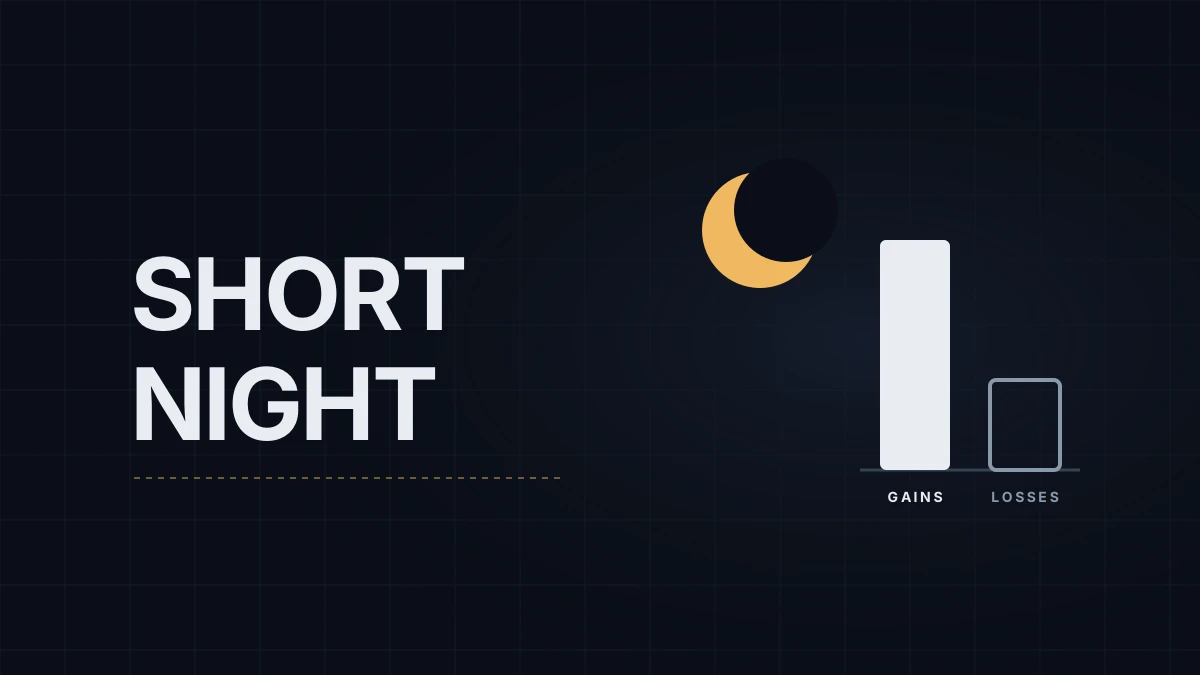
A follow-up by the same group, published in 2011, used gambles that mixed gains and losses. After one night without sleep, volunteers moved from defending against losses to seeking larger gains, with the brain responding more to wins and less to losses. The researchers noted that the effect seemed separate from the drop in attention, and suggested that coffee might not undo it.
Chronic short sleep has its own result. In a 2003 study by Van Dongen and colleagues, two weeks at six hours a night pushed attention lapses to about the level of one full night without sleep, and four hours a night reached the level of two, while the participants' own sleepiness ratings barely rose after the first few days. The feeling of being tired levels off; the performance doesn't.
What it looks like at the screen
None of this shows up in a journal as "tired." It shows up as ordinary mistakes:
- A bigger appetite for long odds. The breakout of a breakout, the add to a position that hasn't confirmed, the trade outside the playbook because the payoff "looked big." That is the shift toward gains the 2011 study describes.
- Losses that sting less. A loss that would normally make you pause doesn't, and the next trade comes faster. It looks a lot like the sequence in the revenge trading post, without the anger.
- Lapses. A data release missed on the calendar, a size typed wrong, a stop not moved after a partial fill.
The physical signals that come before a bad trade, listed in the tilt signs post, are easier to see on a short night than the decision shift itself, so they're the practical early warning.
Putting sleep into the plan
Traders handle it in a few ways, each with a cost.
Log it. Write the hours on the State line of the pre-session block in your trading plan and add them to each day in the trading journal. After 40 or 50 sessions, compare results on short nights with the rest. It costs one line a day and only works if the number is honest.
Set a threshold rule. Below a number of hours you choose in advance, trade minimum size or only your best setup. You give up some good days in exchange for capping the bad ones, and the rule has to be written before the short night, not decided during it.
Skip the session. The cleanest rule and the most expensive one, since days off count against minimum trading days and, if they pile up, against inactivity limits on a prop account.
Rely on caffeine. Cheap and common. It helps with alertness, and the 2011 authors' comment is a reason not to count on it for the part that changes how gains and losses feel.
Persistent trouble sleeping is a question for a doctor, not a trading plan. For the ordinary short night, the useful step is to treat it as information about the trader, the way the plan already treats a data release as information about the market.
Educational content, not investment advice. Futures trading involves substantial risk of loss. Examples are for illustration only. Read the full Risk Disclosure.