Trading Plan Template: One Page for Pre-Session, Live and Ending, and Why No Trade Is a Valid Outcome
A plan you can't read in the minutes before the open doesn't get read. A copyable one-page template split into pre-session, live and ending blocks, two other shapes a plan can take and what each costs, and the arithmetic behind counting a no-trade day as a result.
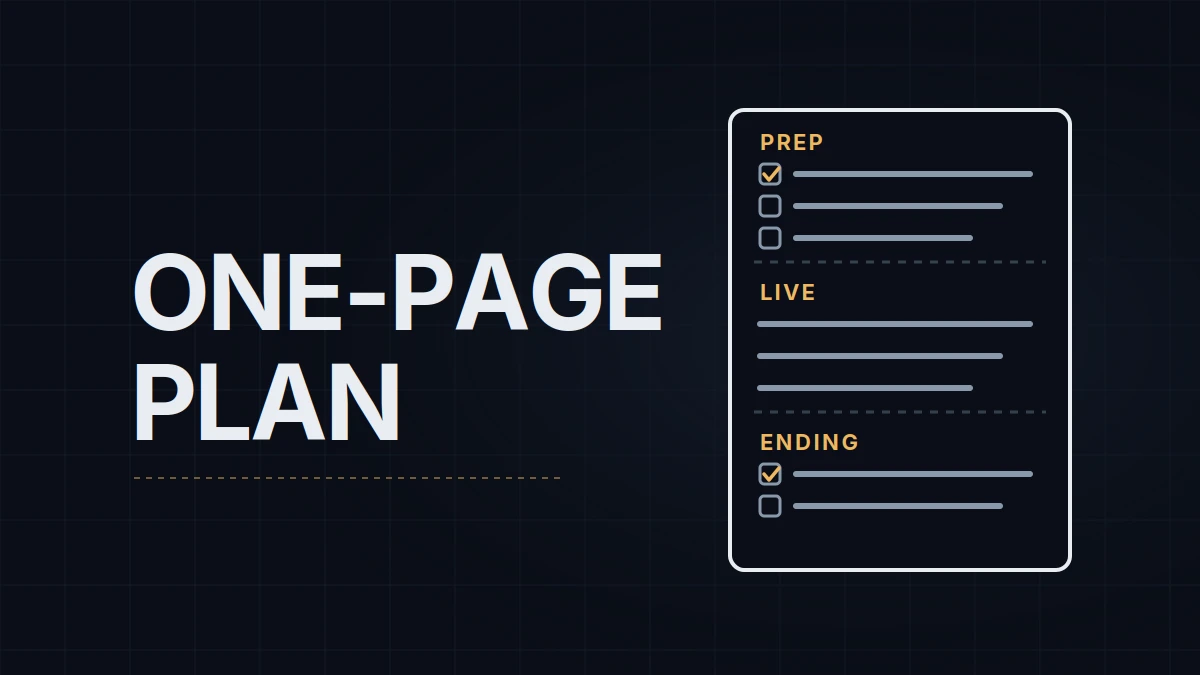
A trading plan is a short list of decisions made before the market can influence them: what you trade, what makes a setup valid, what the day is allowed to cost, and when you stop. A trading plan template is only worth using if it gets read in the few minutes before the first order, which in practice means one page. Anything longer becomes a document you wrote once and never opened again. The page below assumes you can already read the chart it refers to; if not, the chart basics come first.
Copy it, fill the blanks, and delete the lines that don't apply to how you trade.
TRADING PLAN                  Date: __________

Instrument: _______   Session: _______________

PREP (before the first order)

[ ] Levels marked, on the right contract
[ ] Calendar read: releases inside my window,
    and what I do at each
[ ] Context: where price opens against my levels
[ ] Today's limits: max loss, max trades,
    risk per trade
[ ] Account limits: room to the drawdown,
    any scaling or payout change
[ ] State: sleep, mood, anything left over

LIVE (read before the session and after a loss)

Setups I take today: _________________________
Valid only when: _____________________________
Stop: where the idea is wrong, placed with entry
Size: from risk per trade, never from the stop
Exit: ________________________________________
I stop for the day when: _____________________
Flat by: ________   Flat before: _____________

No trade is a valid result.

ENDING (after the last order)

[ ] Flat on every account, no working orders
[ ] Journal rows and screenshots done
[ ] No-trade decisions logged with the reason
[ ] One line: what I did that the plan didn't say
[ ] One question for tomorrow
What each block is for
PREP holds the decisions that get worse once price is moving. The limits line matters most. A maximum daily loss written before the open is a number; the same number decided after two losing trades is a negotiation, held with yourself at your least reliable. Risk per trade sits next to it, separate from the stop, because the stop is set by the setup and the size by the account, as the position sizing post works through. On a prop account the number that decides size is the room left to the drawdown, not the balance. The calendar line needs a decision attached, not just a time: flat before the release, trade through it, or wait for the first reaction. Times are in the tier list of market-moving releases and on the economic calendar. The state line is one honest sentence; if the same answer keeps showing up before bad sessions, The Mental Game of Trading has a framework for finding out why.
LIVE is written as rules to read, not boxes to tick. Ticking "I don't chase" at 9:00 says nothing about 11:40, and a checked box feels like a finished job. The block gets read once before the session and again after any loss, since a loss is when rules start to look negotiable.
The line most plans leave out is "I stop for the day when". Traders fill it in three ways, and each fails differently:
- A money limit, stopping at a set loss, protects the account and is easy to follow. One oversized trade can reach it before the behavior behind it is ever noticed.
- A count limit, stopping after a set number of trades, caps overtrading and does nothing about a single trade that was too big.
- A behavior limit, stopping after any rule is broken twice, catches tilt early and depends entirely on honest counting.
Plenty of traders combine two. The right pair is the one aimed at the mistake your journal shows most often.
ENDING closes the loop. Which fields to record is covered in the trading journal template; the plan only makes sure the rows get written today, while the screenshots still mean something. The line "what I did that the plan didn't say" is where changes to the plan come from. A rule broken every week is either a bad rule or a habit to work on, and a month of those lines is what tells the two apart.
Two other shapes a plan can take
The page above suits discretionary traders who work from levels and need the day's context before deciding anything. Two other shapes are common, and each has a cost.
A scenario plan swaps the context line for two or three if-then statements written every morning: if price opens above yesterday's value area and holds it, look for one thing; if it opens inside, look for another. It prepares you for the open and for trend days better than a checklist does. It takes ten to fifteen minutes each morning, and it pulls you toward trading the scenario you wrote rather than the one that showed up.
A rules card is the same handful of lines every day with nothing to fill in. It fits systematic traders whose setup doesn't depend on the day. It takes a minute to read, and nothing on it makes you look at today's calendar or today's account limits, so those checks have to happen somewhere else.
Mixed versions are normal: this page with one scenario line added, or a rules card with the limits line bolted on.
Why "no trade" counts as a result
The plan defines when a setup exists. A day on which it doesn't appear is the plan working, not a day missing its trade. The reason is the expectancy arithmetic from the expectancy post.
Take a hypothetical trader whose setups, taken only when every condition is met, average +0.3R per trade after costs, R being the amount risked on the trade. Ten of those in a month make +3R. On quiet days the same trader also takes trades that almost qualify. Those carry no edge, and after commissions and slippage they average −0.15R. Twenty of them in a month cost 3R.
| Trades in the month | Count | Average | Total |
|---|---|---|---|
| Setups that met the plan | 10 | +0.3R | +3.0R |
| Trades that almost did | 20 | −0.15R | −3.0R |
| Month | 30 | 0.0R | 0.0R |
The month ends flat and the natural conclusion is that the strategy doesn't work. It made 3R; the extra trades gave it back. On a prop account they cost more than their average suggests, because each one also moves the balance toward the trailing drawdown, and a minimum-days requirement doesn't change what a trade without a setup is worth.
That is why "no trade is a valid result" sits in the LIVE block and why ENDING logs no-trade decisions with a reason. A month of rows that read "watched both setups, neither qualified" is the only evidence that patience is being practiced, and it makes the forced trades easy to spot when they start.
My own plan uses the same three blocks, borrowed from a pilot's pre-flight and landing checklists: PREP and ENDING get ticked, LIVE is a short set of rules I read and confirm once per session. What changed my sessions most was writing "no trade" down as a result instead of treating it as a missing one.
Educational content, not investment advice. Futures trading involves substantial risk of loss. Examples are for illustration only. Read the full Risk Disclosure.