Overtrading: Telling a Busy Day From a Bad One
Fifteen trades can be a disciplined day and four can be overtrading. The difference is whether each trade came from the plan. How to tell a busy day from a bad one after the close, what extra trades cost in fees, and the limits traders use to stop the drift.
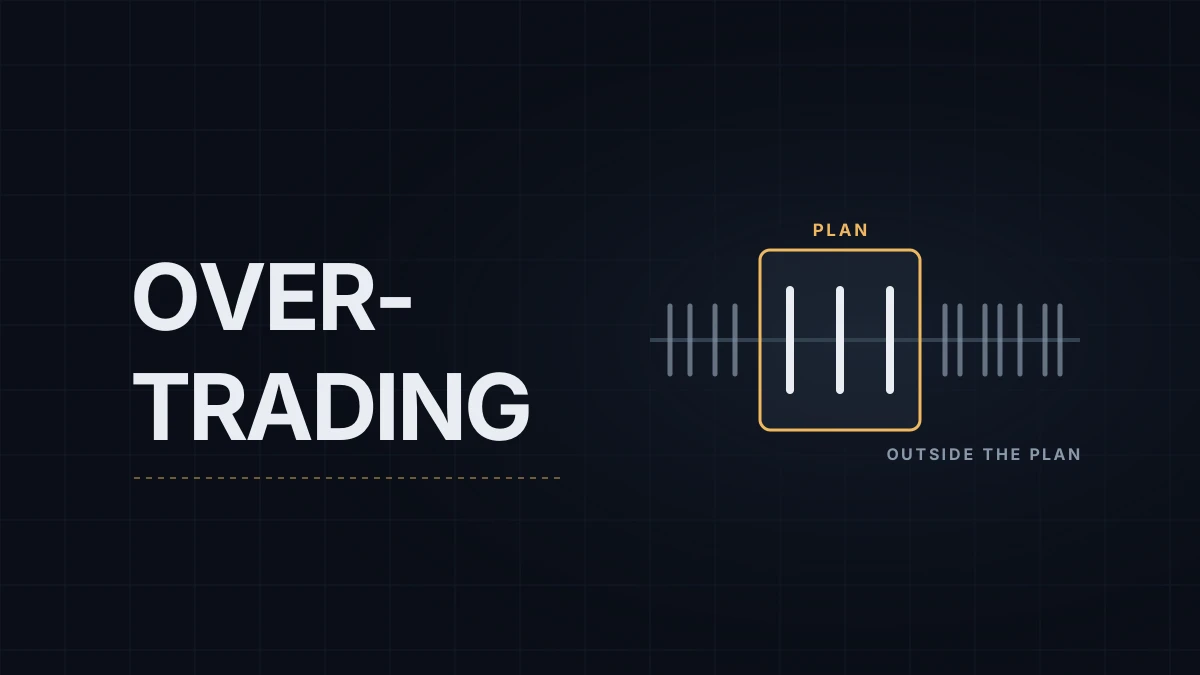
Overtrading is taking trades your plan doesn't call for. It's tempting to define it by a number, and every trading forum has one, but the count doesn't settle it: a scalper whose setup appeared fifteen times took fifteen planned trades, while a level trader who took four on a day with one valid setup overtraded three times. The measure is the plan. If the plan isn't written down yet, the trading plan template is the place to start, and if charts themselves are new, how to read a price chart.
That definition makes overtrading something you check after the close, trade by trade, rather than something you feel during the session. Feelings are unreliable here. A busy day that followed the plan feels exhausting; a bad day can feel productive right up to the end.
What the extra trades cost
Fees are the part that's easy to count. At the time of writing, a round turn on one MNQ, the Micro E-mini Nasdaq-100, costs $1.22 all in on TopstepX, and other prop platforms are in a similar range (MNQ commissions and futures trading fees has the breakdown). Twenty unplanned round turns a day at 3 contracts is 60 contract round turns, $73 a day, and about $1,460 over twenty trading days. That's most of a $2,000 drawdown, spent before the first point of slippage or the first losing trade.
The larger cost doesn't show on a statement. Unplanned trades have no measured expectancy, since they come from no setup, so a day full of them tells you nothing about the strategy and blurs the journal for the days that do.
A busy day or a bad one: the after-close check
Go through the day's trades and ask, for each:
- Could you name the setup before the entry, not after?
- Was the size the planned size?
- Did it start inside your planned session window?
- How long after the previous trade did it start, and was the previous trade a loss?
- Would you take it again from a screenshot of the chart at entry, without knowing the result?
A busy day has many trades and clean answers. A bad day shows a pattern: a loss, then a quick re-entry with no named setup, often at the same size or larger, which is the sequence covered in revenge trading. Another common pattern is trades in the dead hours outside the session, taken out of boredom. Grading the decisions apart from the outcomes, as in the A-to-C game analysis, keeps a profitable bad day from looking like a good one.
Limits traders use
A fixed cap on trades per day is the bluntest tool. It stops the drift for certain, and on a day when the setup does appear often, it also stops the good trades after the cap.
A time window, trading only during the hours the plan covers, removes the boredom trades without touching the busy ones.
A cooldown after a loss, from a few minutes to the rest of the session, breaks the loss-and-quick-re-entry sequence where it starts. A daily loss limit enforced by the platform does the same for the size of the damage, and NinjaTrader can lock the account when it's hit; the setup is in the NinjaTrader daily loss limit.
Some traders restrict themselves to their best-graded setup for a period, giving up the marginal trades entirely until the journal shows the discipline is back.
My trading day runs in set time blocks, and a trade outside them is the first thing I look for when a day went wrong.
Educational content, not investment advice. Futures trading involves substantial risk of loss. Examples are for illustration only. Read the full Risk Disclosure.